
Robert Schumann
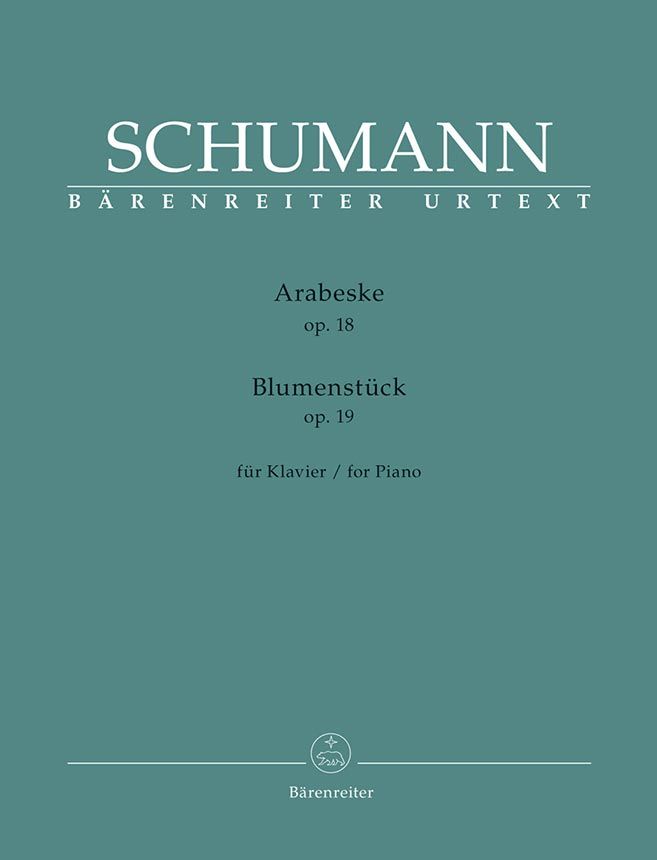
Arabeske op. 18 - Blumenstück op. 19
for Piano
Robert Schumann
Arabeske op. 18 - Blumenstück op. 19
for Piano
- Formazione pianoforte
- Compositore Robert Schumann
- Serie Bärenreiter Urtext
- Editore Holger M. Stüwe
-
Difficoltà
- Edizione spartiti (urtext)
- Casa Editrice Bärenreiter Verlag
- Numero d'ordine BA10865
 disponibile
sarà spedito in 1-2 giorni lavorativi
IVA inclusa,
Escluse le spese di spedizione
Non disponibile in tutti i Paesi. Saperne di più

Descrizione:
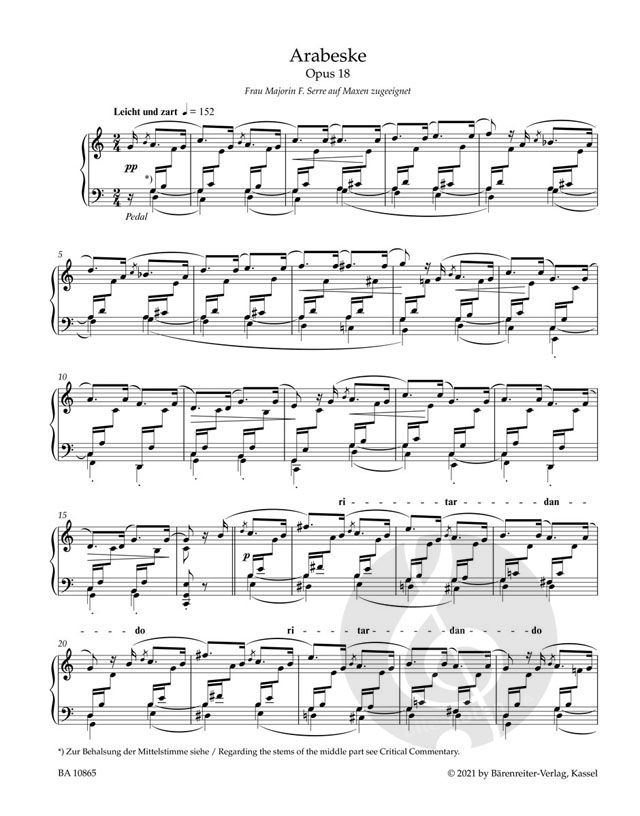
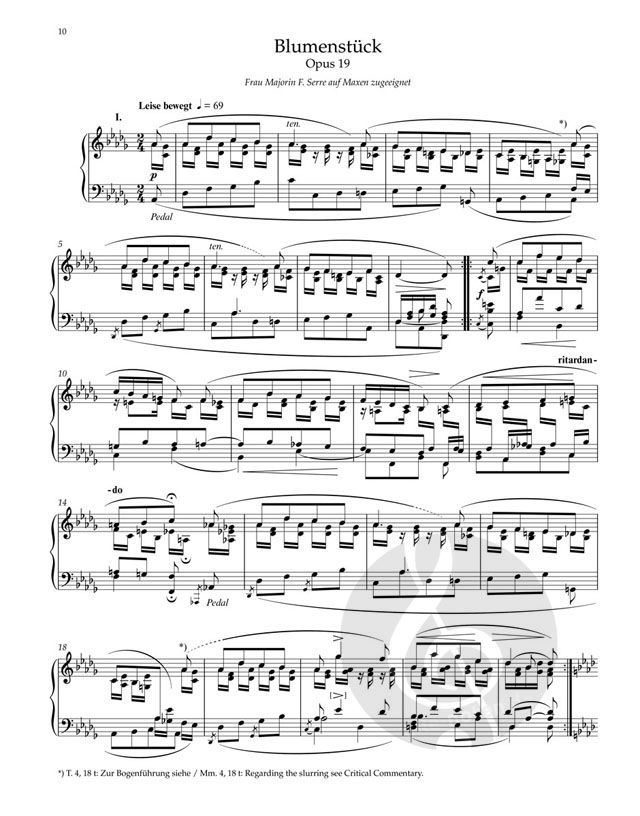
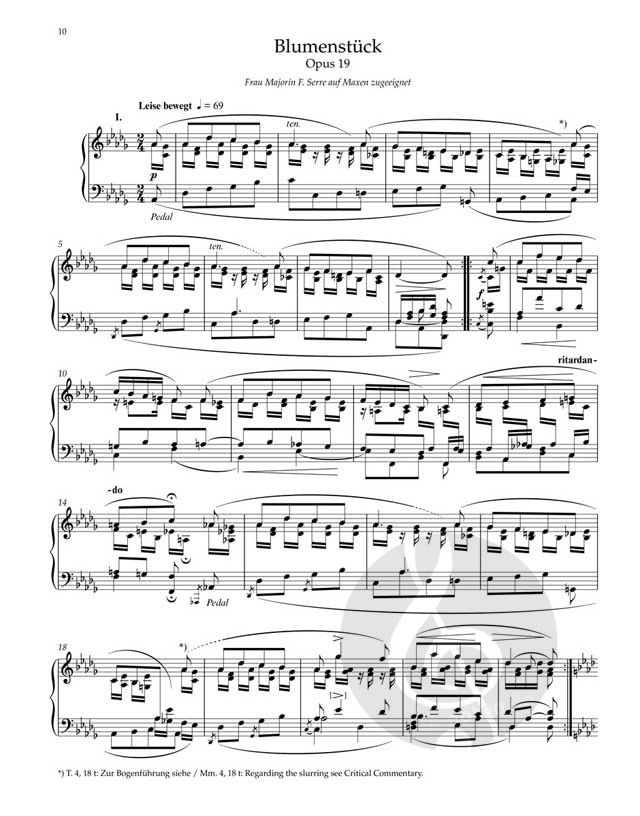
Schumann's 'Arabeske' and 'Blumenstück' were both composed while he was living in Vienna from October 1838 to April 1839, and are thus companions to such major piano pieces as the 'Fantasy in C major' (op. 17), the 'Humoresque' (op. 20) and the cycles 'Nachtstücke' (op. 23) and 'Faschingsschwank aus Wien' (op. 26). Unlike these masterpieces, they are more ingratiating, possibly as a concession to the Viennese public; but whether the 'Arabeske' is a 'delicate piece for the ladies', as Schumann once maintained, is open to debate.
For our new edition of these popular pieces the editor has re-evaluated the surviving sources, devoting special attention to the placement of slurs and incorporating the latest findings in Schumann scholarship. Rounding off the volume are a clear and uncluttered engraving, practical page turns and informative notes on historical performance practice by Sezi Seskir, a fortepiano specialist from Bucknell University (Lewisburg, PA) with a special interest in Schumann's pianism as well as 18th- and 19th-century performance practice.
For our new edition of these popular pieces the editor has re-evaluated the surviving sources, devoting special attention to the placement of slurs and incorporating the latest findings in Schumann scholarship. Rounding off the volume are a clear and uncluttered engraving, practical page turns and informative notes on historical performance practice by Sezi Seskir, a fortepiano specialist from Bucknell University (Lewisburg, PA) with a special interest in Schumann's pianism as well as 18th- and 19th-century performance practice.
-
Vorwort
-
Arabeske op. 18
-
Blumenstück op. 19
-
Critical Commentary
I clienti hanno valutato questo prodotto:
Informazioni del Produttore:
Bärenreiter-Verlag Karl Vötterle GmbH & Co. KG
Heinrich-Schütz-Allee 35-37
34131
Kassel
Deutschland
Prodotti correlati:

- pianoforte
- spartiti per scaricare (Urtext)
- Bärenreiter Verlag
-
-
immediatamente disponibile
Scarica subito dopo l'ordinazione - Download istantaneo
Altri clienti hanno acquistato anche:

- pianoforte
- spartiti
-
disponibile
sarà spedito in 1-2 giorni lavorativi - Disponibile anche per il download!

Adele
- canzoniere
- spartiti
-
disponibile
sarà spedito in 1-2 giorni lavorativi

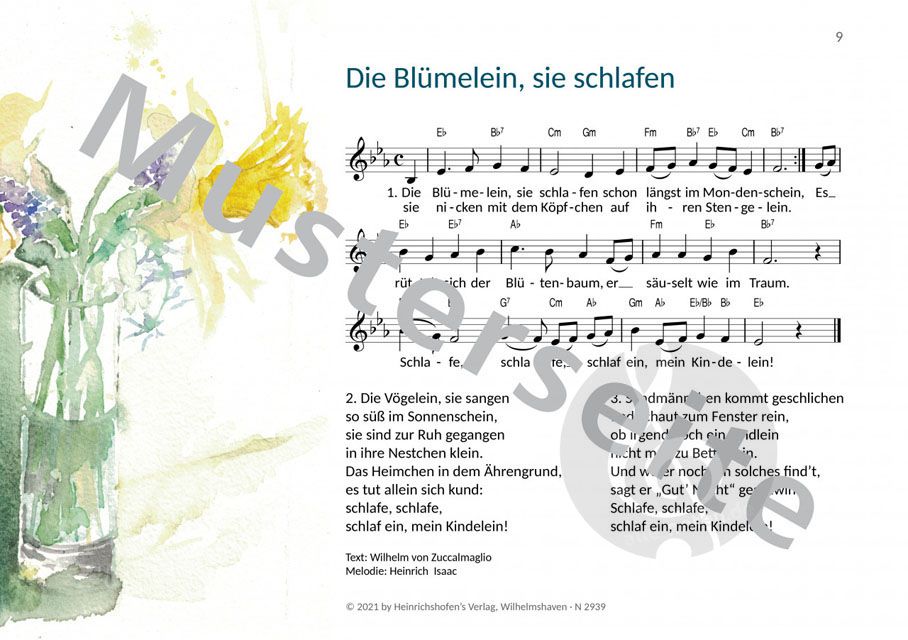
Abend- und Schlaflieder
- canzoniere
- spartiti (melodia, testi e accordi)
-
disponibile
sarà spedito in 1-2 giorni lavorativi

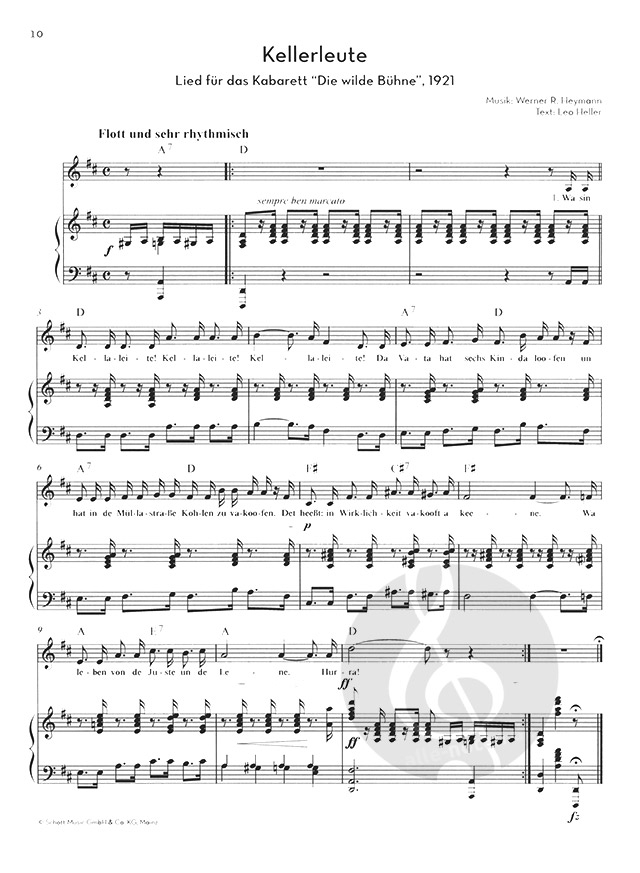
Werner Richard Heymann
40 Songs des größten UFA-Komponisten
- canzoniere
- spartiti
-
disponibile
sarà spedito in 1-2 giorni lavorativi

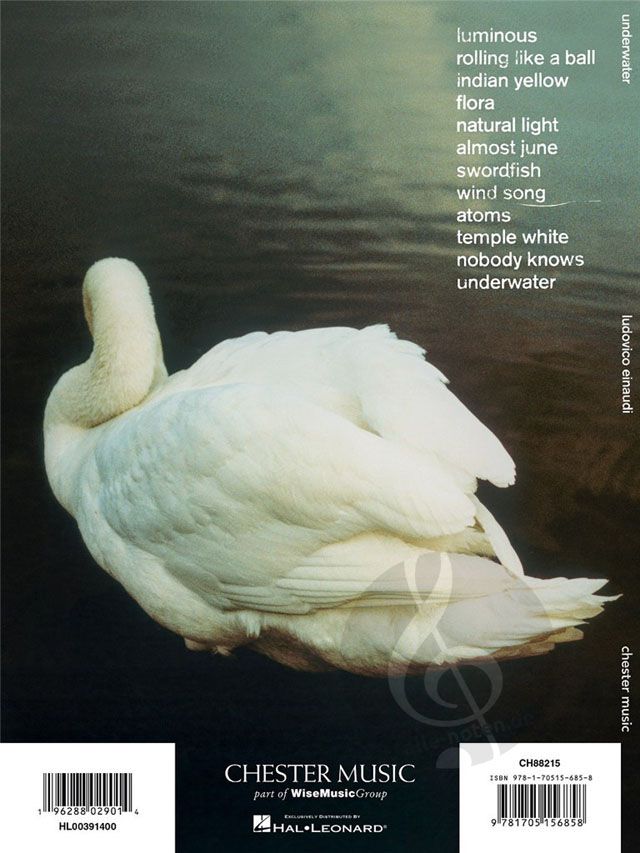
Ludovico Einaudi
- pianoforte
- spartiti
-
disponibile
sarà spedito in 1-2 giorni lavorativi

- canzoniere
- spartiti e online audio
-
sarà spedito in 3-6 giorni lavorativi

Superleichte Arrangements für Klavierbeginner
- pianoforte
- spartiti
- Hans-Günter Heumann
-
disponibile
sarà spedito in 1-2 giorni lavorativi

- coro di bambini e pianoforte
- partitura per pianoforte
-
disponibile
sarà spedito in 1-2 giorni lavorativi

- canzoniere
- spartiti e CD
-
disponibile
sarà spedito in 1-2 giorni lavorativi

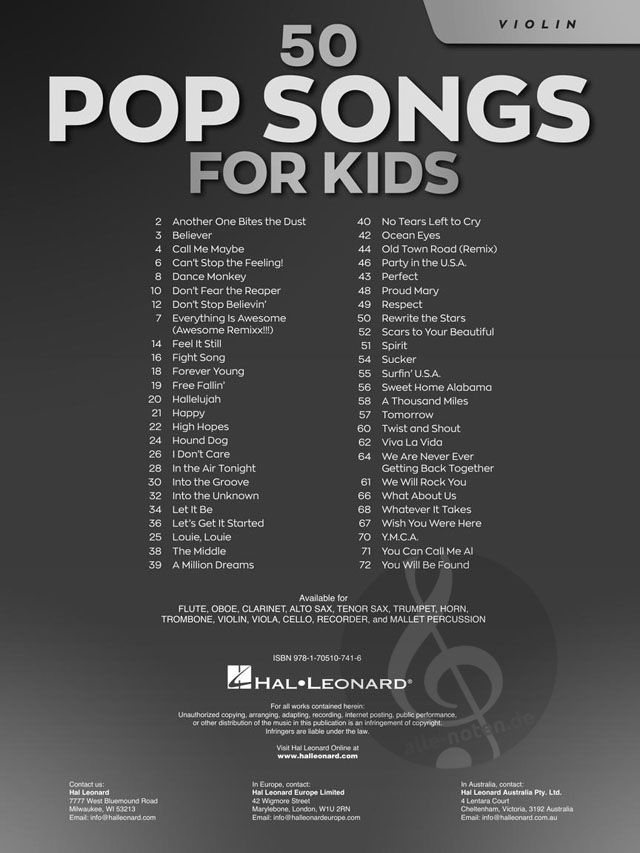
for Violin
- violino
- spartiti
-
disponibile
sarà spedito in 1-2 giorni lavorativi

- violoncello e pianoforte
- partitura per pianoforte, parte/i e online audio
-
disponibile
sarà spedito in 1-2 giorni lavorativi

- Tromba
- spartiti e online audio
-
disponibile
sarà spedito in 1-2 giorni lavorativi - Disponibile anche per il download!

Original Works from the Baroque to the Modern era
- Duetto di violoncelli
- spartiti
-
disponibile
sarà spedito in 1-2 giorni lavorativi - Disponibile anche per il download!

Lady Gaga
- canzoniere
- spartiti
-
sarà spedito in 3-6 giorni lavorativi








- canzoniere
- spartiti
-
disponibile
sarà spedito in 1-2 giorni lavorativi