
Michael Töpel
Confessio
für Orgel: 'Eine feste Burg'
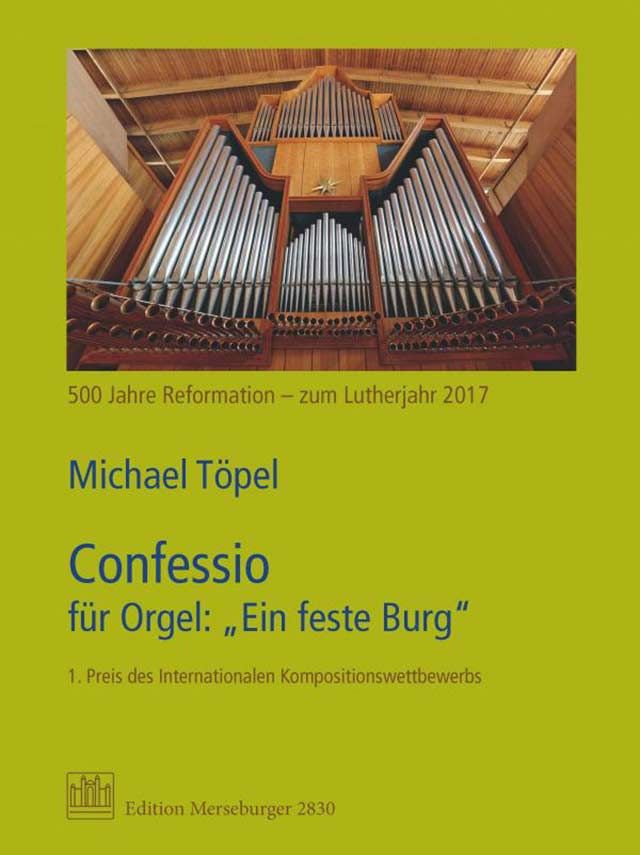
Michael Töpel
Confessio
für Orgel: 'Eine feste Burg'
- Formazione organo
- Compositore Michael Töpel
-
Difficoltà
- Edizione spartiti
- Casa Editrice Edition Merseburger
- Numero d'ordine MERSEB2830
 disponibile
sarà spedito in 1-2 giorni lavorativi
IVA inclusa,
Escluse le spese di spedizione
Non disponibile in tutti i Paesi. Saperne di più
Descrizione:
1. price of the International composition contest 500 years of Luther
Statement of the president of the jury on the prize award:
The first, and only, prize in the composition contest organised by Merseburger Verlag under the patronage of Bishop Prof. Dr. Martin Hein goes to Michael Töpel's composition Confessio for organ: 'Ein feste Burg'. The compositions entered were largely of remarkable quality and originality. By the end of our deliberations, however, only Michael Töpel's Confessio remained in contention for the prize. The gap between it and the other compositions was too great for a second and third prize to be considered. The choice for the first prize was unanimous. What appealed to us about Töpel's piece was its complexity, originality and expressiveness and the inherently consistent nature of the details throughout the ambitious score. Töpel never succumbed to the common error of attempting to create a brilliant stylistic copy.
On behalf of the jury, Martin Forciniti, president
Statement of the president of the jury on the prize award:
The first, and only, prize in the composition contest organised by Merseburger Verlag under the patronage of Bishop Prof. Dr. Martin Hein goes to Michael Töpel's composition Confessio for organ: 'Ein feste Burg'. The compositions entered were largely of remarkable quality and originality. By the end of our deliberations, however, only Michael Töpel's Confessio remained in contention for the prize. The gap between it and the other compositions was too great for a second and third prize to be considered. The choice for the first prize was unanimous. What appealed to us about Töpel's piece was its complexity, originality and expressiveness and the inherently consistent nature of the details throughout the ambitious score. Töpel never succumbed to the common error of attempting to create a brilliant stylistic copy.
On behalf of the jury, Martin Forciniti, president