
Malcolm Arnold
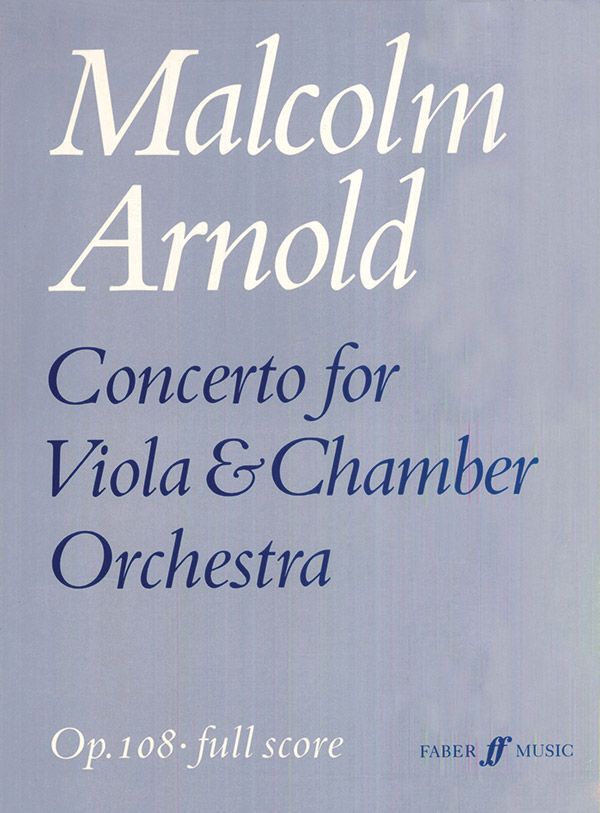
Concerto for Viola & Chamber Orchestra op. 108
Score
Dimostrazione
ascoltare
Malcolm Arnold
Concerto for Viola & Chamber Orchestra op. 108
Score
- Formazione viola e orchestra di camera
- Compositore Malcolm Arnold
- Edizione partitura
- Casa Editrice Faber Music
- Numero d'ordine 0571508936
 sarà spedito in 3-6 giorni lavorativi
IVA inclusa,
Escluse le spese di spedizione
Non disponibile in tutti i Paesi. Saperne di più

Descrizione:
... It is a revelation to hear something of the composer's other side. The Viola Concerto, featuring Rivka Golani, is the real thing: post Walton, heartfelt viola writing... Sarah Pope, CD Classics, December 1992
Instrumentation: 1222 - 2000 - strings
The viola is often thought of as a Cinderella instrument. Shy and retiring, it would not naturally have occurred to Arnold the extrovert as an obvious concerto vehicle. In his youth he wrote a beautiful Viola Sonata, and in 1971, to a commission from the Northern Sinfonia for a work for their principal viola, Roger Best, he wrote the fine Viola Concerto op 108. A first movement full of bustling semiquavers, and a brisk jig for the finale flank the heart of the work, an extended slow movement. This is a surprisingly forward-looking Andante, full of unexpected clashes and bitonal harmony, and patches where soloist and accompaniment are clearly at odds. Only at the end is real calm established, after the uneasy lyricism that has previously been the dominant mood.
Instrumentation: 1222 - 2000 - strings
The viola is often thought of as a Cinderella instrument. Shy and retiring, it would not naturally have occurred to Arnold the extrovert as an obvious concerto vehicle. In his youth he wrote a beautiful Viola Sonata, and in 1971, to a commission from the Northern Sinfonia for a work for their principal viola, Roger Best, he wrote the fine Viola Concerto op 108. A first movement full of bustling semiquavers, and a brisk jig for the finale flank the heart of the work, an extended slow movement. This is a surprisingly forward-looking Andante, full of unexpected clashes and bitonal harmony, and patches where soloist and accompaniment are clearly at odds. Only at the end is real calm established, after the uneasy lyricism that has previously been the dominant mood.