
Frank Reinshagen
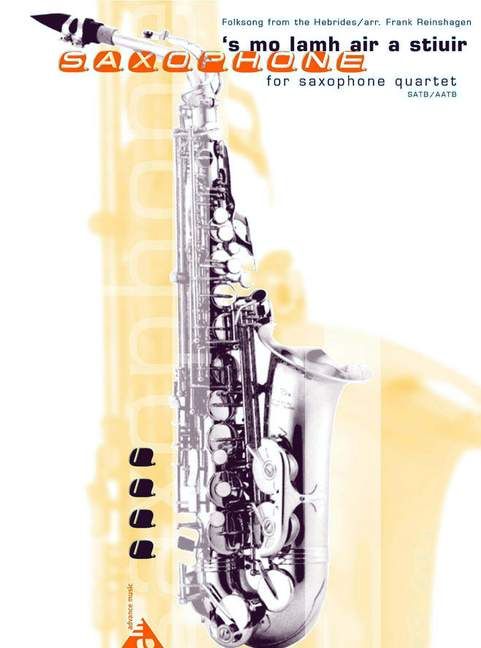
'S mo lamh air a stiuir
The Skye Steersman's Song für Saxophone Quartet (SATB/AATB)
PDF
vista
Frank Reinshagen
'S mo lamh air a stiuir
The Skye Steersman's Song für Saxophone Quartet (SATB/AATB)
- Formazione quartetto di sassofoni (SATB/AATB)
- Compositore Frank Reinshagen
-
Difficoltà
- Edizione partitura e parti
- Casa Editrice Advance Music
- Numero d'ordine ADV07622
 disponibile
sarà spedito in 1-2 giorni lavorativi
IVA inclusa,
Escluse le spese di spedizione
Non disponibile in tutti i Paesi. Saperne di più
Descrizione:
Compatible with clarinet and brass editions. Medium. Writing these arrangements, Frank Reinshagen has created little masterpieces, which broaden the rhythmical and harmonic context of the original tunes in an interesting manner without detracting from their archaic and melancholic character. These original tunes are - in a direct or wider sense - of Celtic origin, in other words, they have been borrowed from the Irish, Scottish and Gaelic musical tradition.These through-composed arrangements are rather easy to perform from the rhythmical and technical point of view. Yet, they are quite demanding in respect of the key they are written in, their intonation and, especially, their interpretation. Their different instrumentations are fully compatible with each other and, due to their overall structure, they are also suitable to be played with multi-scored parts. Annotation on 'S mo lamh air a stiuir: The interpretation of 'S mo lamh air a stiuir - the song of a helmsman living on the Isle of Skye - should be interpreted with the musicians paying careful attention to its dynamics and phrasing, which reflect the up-and-down motion of the stormy Artic Ocean. For this arrangement the key D minor - which is one whole tone lower than the original - has been chosen to make sure that the piece is playable, especially for a clarinet quartet.
I clienti hanno valutato questo prodotto:
Informazioni del Produttore:
Advance Music
Weihergarten 5
55116
Mainz
Deutschland
Altri clienti hanno acquistato anche:

- ensemble variabile (4 fiati e ritmo)
- partitura e parti
-
disponibile
sarà spedito in 1-2 giorni lavorativi
- 2 trombe e 2 tromboni
- spartiti
-
disponibile
sarà spedito in 1-2 giorni lavorativi
- 3 clarinetti e clarinetto basso
- partitura e parti
- Frank Reinshagen
-
disponibile
sarà spedito in 1-2 giorni lavorativi
- 2 clarinetti e clarinetto basso
- partitura e parti
-
disponibile
sarà spedito in 1-2 giorni lavorativi

Frank Reinshagen
- trio di sassofoni (AAT)
- partitura e parti
-
sarà spedito in 4-8 giorni lavorativi
- Disponibile anche per il download!
- 3 clarinetti e clarinetto basso
- partitura e parti
-
disponibile
sarà spedito in 1-2 giorni lavorativi

- 4 ottoni
- partitura e parti
-
disponibile
sarà spedito in 1-2 giorni lavorativi

Frank Reinshagen
- orchestra jazz
- partitura, parti e cd
-
disponibile
sarà spedito in 1-2 giorni lavorativi

- orchestra jazz
- partitura, parti e cd
-
disponibile
sarà spedito in 1-2 giorni lavorativi
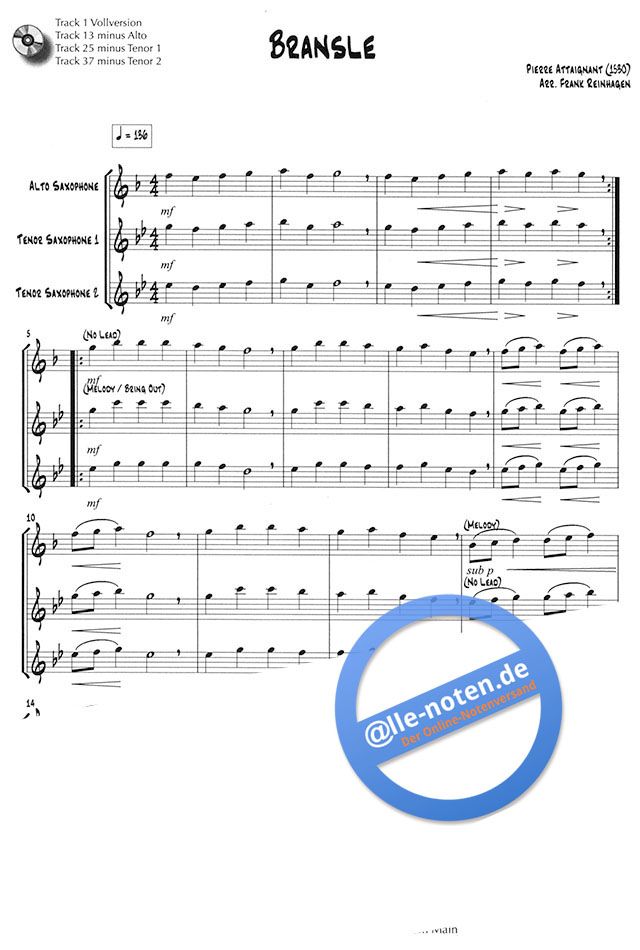
Frank Reinshagen
- trio di sassofoni (ATT)
- partitura e parti
-
disponibile
sarà spedito in 1-2 giorni lavorativi - Disponibile anche per il download!