
Bedrich Smetana
Moldau
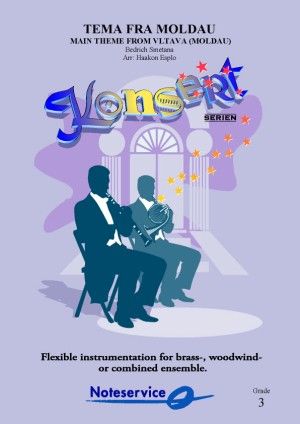
Dimostrazione
ascoltare
PDF
vista
Bedrich Smetana
Moldau
- Formazione ensemble variabile (7 strumenti)
- Compositore Bedrich Smetana
- Editore Haakon Esplo
- Serie Flex 7
- Edizione partitura e parti
- Casa Editrice Norsk Noteservice
- Numero d'ordine WN261700085
 sarà spedito 1-2 settimani
IVA inclusa,
Escluse le spese di spedizione
Non disponibile in tutti i Paesi. Saperne di più

Descrizione:
Main theme from Vltava (Moldau)
The Czech composer Bedrich Smetana belongs to the national romantic period in music history. Many of his works is what we call 'program music', music that describes specific events or nature.
In 1872 Smetana started writing 6 symphonic poems which was to musically tell about his beloved Bohemia and its people's history. The second poem, Vltava, the Czech name of the river Moldau, describes the river's course from beginning to end with all the happenings along the way. This arrangement contains the beautiful and magnificent main theme.
The music is to be considered as a national treasure in the Czech Republic.
To the conductor
The tempo must not be to slow. The music is to 'float' like the river Vltava and describe the amazing scenery. All legato movement is important to reveal this effect. Dynamics and articulation helps to reinforce the image of water that flows.
If you have problems balancing part 1, this can be downloaded written for flute and alto saxophone (subpart). Part 2 is also provided with subpart for tenor saxophone.
The Czech composer Bedrich Smetana belongs to the national romantic period in music history. Many of his works is what we call 'program music', music that describes specific events or nature.
In 1872 Smetana started writing 6 symphonic poems which was to musically tell about his beloved Bohemia and its people's history. The second poem, Vltava, the Czech name of the river Moldau, describes the river's course from beginning to end with all the happenings along the way. This arrangement contains the beautiful and magnificent main theme.
The music is to be considered as a national treasure in the Czech Republic.
To the conductor
The tempo must not be to slow. The music is to 'float' like the river Vltava and describe the amazing scenery. All legato movement is important to reveal this effect. Dynamics and articulation helps to reinforce the image of water that flows.
If you have problems balancing part 1, this can be downloaded written for flute and alto saxophone (subpart). Part 2 is also provided with subpart for tenor saxophone.
I clienti hanno valutato questo prodotto:
Informazioni del Produttore:
Notebutikken.no - Vigmostad & Bjørke AS
Breivollveien 25
N-0668
Oslo
Norwegen
Altri clienti hanno acquistato anche:
Earth, Wind & Fire
- banda
- partitura e parti
- Paul Murtha
-
disponibile
sarà spedito in 1-2 giorni lavorativi - Disponibile anche per il download!
Karl Jenkins
- banda
- partitura e parti
- Robert Longfield
-
disponibile
sarà spedito in 1-2 giorni lavorativi
- banda
- partitura e parti
- Hans-Joachim Rogoll
-
disponibile
sarà spedito in 1-2 giorni lavorativi
- orchestra jazz
- partitura, parti e online video
- John Berry
-
sarà spedito in 3-6 giorni lavorativi
Josh Groban
- orchestra jazz (solo: sassofono tenore)
- partitura e parti
- Mike Smukal
-
sarà spedito in 3-6 giorni lavorativi
- Disponibile anche per il download!
Ray Charles
- orchestra jazz
- partitura e parti
- Mike Lewis
-
disponibile
sarà spedito in 1-2 giorni lavorativi
Wolfgang Amadeus Mozart
- ensemble variabile (7 strumenti)
- partitura e parti
- Idar Torskangerpoll
-
sarà spedito 1-2 settimani


- ensemble variabile
- partitura e parti
- Nicholas Hare
-
disponibile
sarà spedito in 1-2 giorni lavorativi