
Gustav Mahler
Die zwei blauen Augen
from Songs of a Wayfarer

PDF
vista
Consigliare
consigliare questo articolo
Gustav Mahler
Die zwei blauen Augen
from Songs of a Wayfarer
- Formazione coro misto (SATB)
- Edizione partitura corale
- Compositore Gustav Mahler
- Editore Clytus Gottwald
- Casa Editrice Universal Edition
- Numero d'ordine UE31969
IVA inclusa,
Escluse le spese di spedizione
 disponibile
|
sarà spedito in 1-2 giorni lavorativi

Descrizione:
Mahler's song The Two Blue Eyes of my Beloved is a part of the cycle Songs of a Wayfarer from 1896.
1987 was the year in which Gustav Mahler published his Lieder eines fahrenden Gesellen (Songs of a Wayfarer) with Weinberger - in both orchestral and piano versions. Which Mahler prepared first is not known; a score of the work is not mentioned until 1895, but on the other hand, Mahler had described the piano version as a piano reduction in 1893. These songs were heard in Schoenberg's Association concert on 6 February 1920, in the small auditorium of the Konzerthaus in Vienna; however they were not performed in the piano version, which would have fitted well with the evening's other works (Second Suite from Daphnis et Chloé by Ravel in the piano arrangement for four hands; Piano Pieces by Satie; Nursery Songs by Mussorgsky; and Romance Op.23 for violin and piano by Szymanowski), but in an arrangement for voice, flute, clarinet , piano, harmonium and string quintet. This arrangement was not one Schoenberg had entrusted to a pupil, as so often, but one he had done himself, presumably because of his intense involvement with Mahler's thinking and with Judaism. He increasingly saw himself as a successor to his adored friend and champion. At the concert in February 1920, conducted by Schoenberg himself, the part of these typically 'male voice songs' was taken by a female singer. The arrangement of the Lieder eines fahrenden Gesellen did not necessitate the preparation of a new score; Schoenberg simply annotated the orchestral edition of 1897. While flute, clarinet and strings tended to play their instrument's first part, most of the directions and changes affected the piano and the harmonium, which had to replace the wind instruments, harp and timpani. That means that these keyboard instruments often jump from one part to another.
1987 was the year in which Gustav Mahler published his Lieder eines fahrenden Gesellen (Songs of a Wayfarer) with Weinberger - in both orchestral and piano versions. Which Mahler prepared first is not known; a score of the work is not mentioned until 1895, but on the other hand, Mahler had described the piano version as a piano reduction in 1893. These songs were heard in Schoenberg's Association concert on 6 February 1920, in the small auditorium of the Konzerthaus in Vienna; however they were not performed in the piano version, which would have fitted well with the evening's other works (Second Suite from Daphnis et Chloé by Ravel in the piano arrangement for four hands; Piano Pieces by Satie; Nursery Songs by Mussorgsky; and Romance Op.23 for violin and piano by Szymanowski), but in an arrangement for voice, flute, clarinet , piano, harmonium and string quintet. This arrangement was not one Schoenberg had entrusted to a pupil, as so often, but one he had done himself, presumably because of his intense involvement with Mahler's thinking and with Judaism. He increasingly saw himself as a successor to his adored friend and champion. At the concert in February 1920, conducted by Schoenberg himself, the part of these typically 'male voice songs' was taken by a female singer. The arrangement of the Lieder eines fahrenden Gesellen did not necessitate the preparation of a new score; Schoenberg simply annotated the orchestral edition of 1897. While flute, clarinet and strings tended to play their instrument's first part, most of the directions and changes affected the piano and the harmonium, which had to replace the wind instruments, harp and timpani. That means that these keyboard instruments often jump from one part to another.
I clienti hanno valutato questo prodotto:
Spartiti dal 1969

Dal 1969, oltre 500.000 clienti si fidano di noi. Con un'enorme selezione di oltre 1.000.000 di spartiti, siamo uno dei più grandi fornitori in Europa. Grazie al nostro grande magazzino possiamo spesso spedire gli spartiti entro 24 ore. Qualsiasi spartito stiate cercando: siete nel posto giusto!
La vostra Stefanie Reichert
Responsabile del servizio clienti
Altri clienti hanno acquistato anche:

Billy Joel, The King's Singers
- coro misto (SATB)
- partitura corale
- Bob Chilcott
-
disponibile
|
sarà spedito in 1-2 giorni lavorativi

Michael Ostrzyga
- coro misto (SSAATTBB)
- spartiti
-
disponibile
|
sarà spedito in 1-2 giorni lavorativi

Hubert von Goisern
- coro misto (SATB)
- partitura corale
- Lorenz Maierhofer
-
disponibile
|
sarà spedito in 1-2 giorni lavorativi


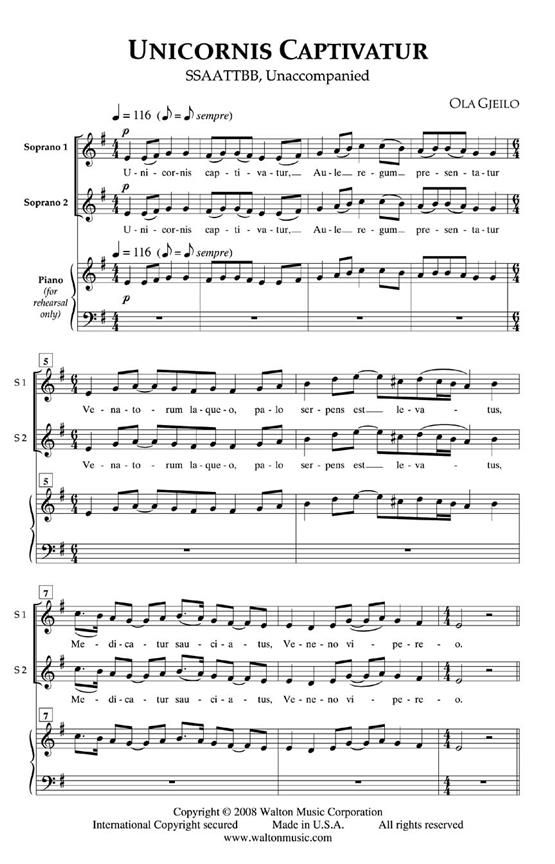
Ola Gjeilo
- coro misto (SSAATTBB)
- partitura corale
-
disponibile
|
sarà spedito in 1-2 giorni lavorativi

- coro misto (SATB)
- partitura corale
- Peter Altmann Franz Blasl
-
disponibile
|
sarà spedito in 1-2 giorni lavorativi

Jaakko Mäntyjärvi
- coro misto (SATB)
- partitura corale
- Norman Luboff
-
disponibile
|
sarà spedito in 1-2 giorni lavorativi