
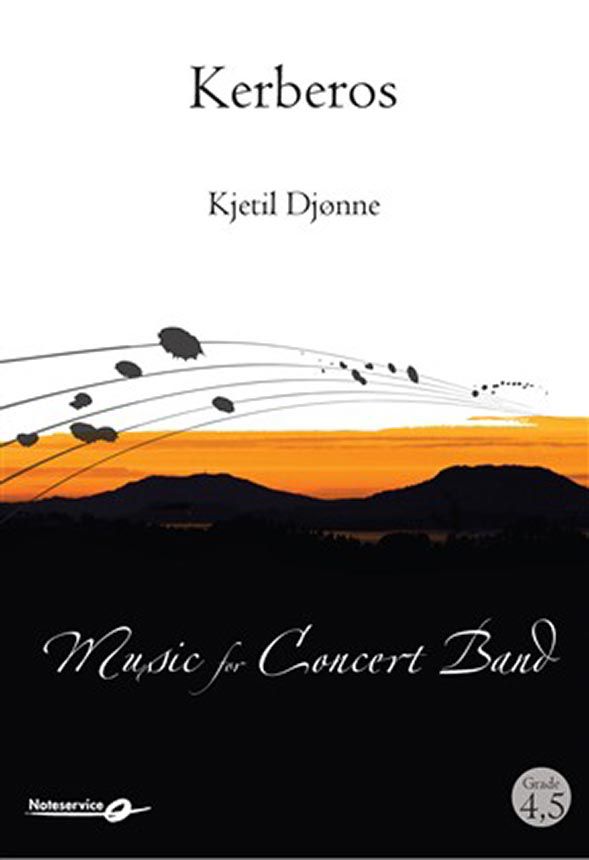
Kjetil Djønne
Kerberos
Dimostrazione
ascoltare
PDF
1
vista
PDF
2
vista
Kjetil Djønne
Kerberos
- Formazione banda
- Compositore Kjetil Djønne
- Serie Norsk Concert Band Originals
-
Difficoltà
- Edizione partitura e parti
- Casa Editrice Norsk Noteservice
- Numero d'ordine WN261721165
 sarà spedito 1-2 settimani
IVA inclusa,
Escluse le spese di spedizione
Non disponibile in tutti i Paesi. Saperne di più

Descrizione:
Kerberos was written to Norwegian band Eidanger Pike- og guttekorps, Sigurd Skramsett conductor.
When Sigurd Skramsett got in touch and wanted to commision a piece for their anniversary concert in November, I immediately thought of composing a piece about his role in the local bands. He has conducted the band for 15 years and has been important to the whole banding community in Telemark, Norway. My meeting with Sigurd in the summer of 2019 was at Dirigentuka (Conductors week) in Stavanger. We conducted many different types of music, including a blues by Torstein Aagard-Nilsen. All of the music at the course has inspired me in this piece.
The name Sigurd originates from Norse mythology and means 'victory' and 'guardian'. KERBEROS is the three-headed dog guarding the entrance to the underworld of Greek mythology. Three heads, representing the past, present and future, became three movements representing three styles, and moods, in this work.
Kjetil Djønne
When Sigurd Skramsett got in touch and wanted to commision a piece for their anniversary concert in November, I immediately thought of composing a piece about his role in the local bands. He has conducted the band for 15 years and has been important to the whole banding community in Telemark, Norway. My meeting with Sigurd in the summer of 2019 was at Dirigentuka (Conductors week) in Stavanger. We conducted many different types of music, including a blues by Torstein Aagard-Nilsen. All of the music at the course has inspired me in this piece.
The name Sigurd originates from Norse mythology and means 'victory' and 'guardian'. KERBEROS is the three-headed dog guarding the entrance to the underworld of Greek mythology. Three heads, representing the past, present and future, became three movements representing three styles, and moods, in this work.
Kjetil Djønne