
Wolfgang Amadeus Mozart
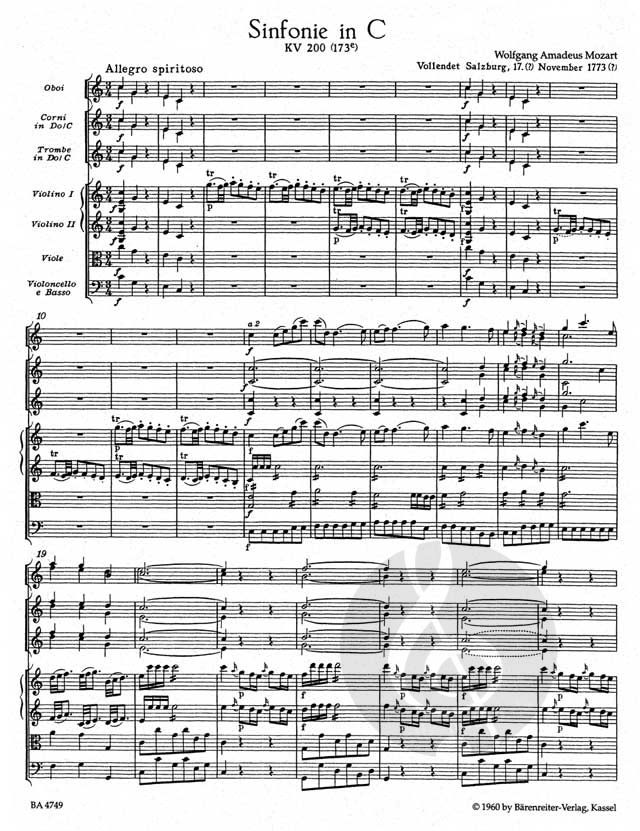

Urtext der Neuen Mozart-Ausgabe. Oboe (2), Horn (2), Trompete (2) - Partitur; Urtextausgabe
Urtext der Neuen Mozart-Ausgabe. Oboe (2), Horn (2), Trompete (2) - Partitur; Urtextausgabe
- orchestra
- partitura (Urtext) per scaricare
- Bärenreiter Verlag
-
 immediatamente disponibile
Scarica subito dopo l'ordinazione - Download istantaneo
immediatamente disponibile
| Scarica subito dopo l'ordinazione
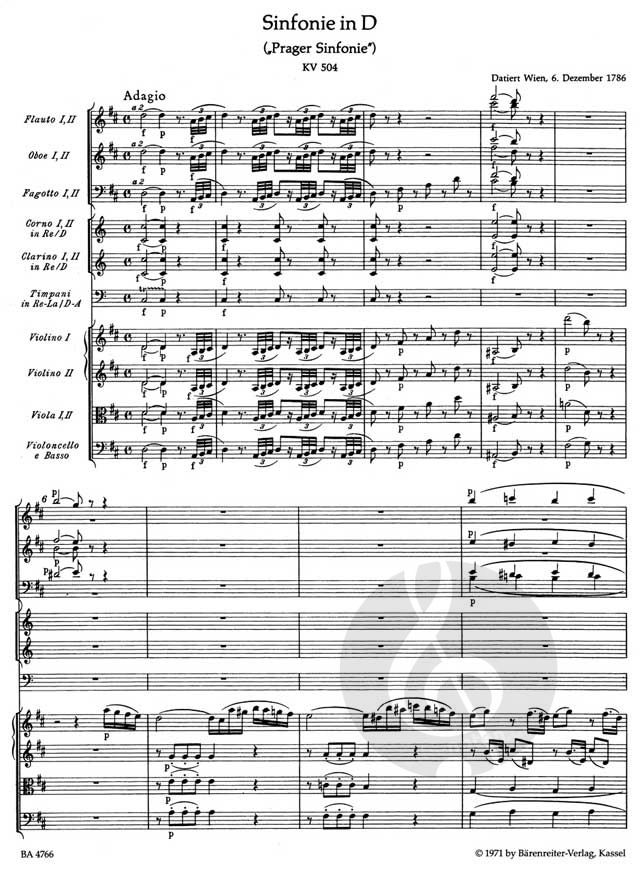
Wolfgang Amadeus Mozart's Symphony No. 38 in D major, K. 504, famously known as the "Prague Symphony", is universally regarded as one of the crowning achievements of Viennese Classicism. Enthusiastica...
Wolfgang Amadeus Mozart's Symphony No. 38 in D major, K. 504, famously known as the "Prague Symphony", is universally regarded as one of the crowning achievements of Viennese Classicism. Enthusiastica...
- orchestra
- partitura (Urtext) per scaricare
- Bärenreiter Verlag
-
immediatamente disponibile
Scarica subito dopo l'ordinazione - Download istantaneo
immediatamente disponibile
| Scarica subito dopo l'ordinazione
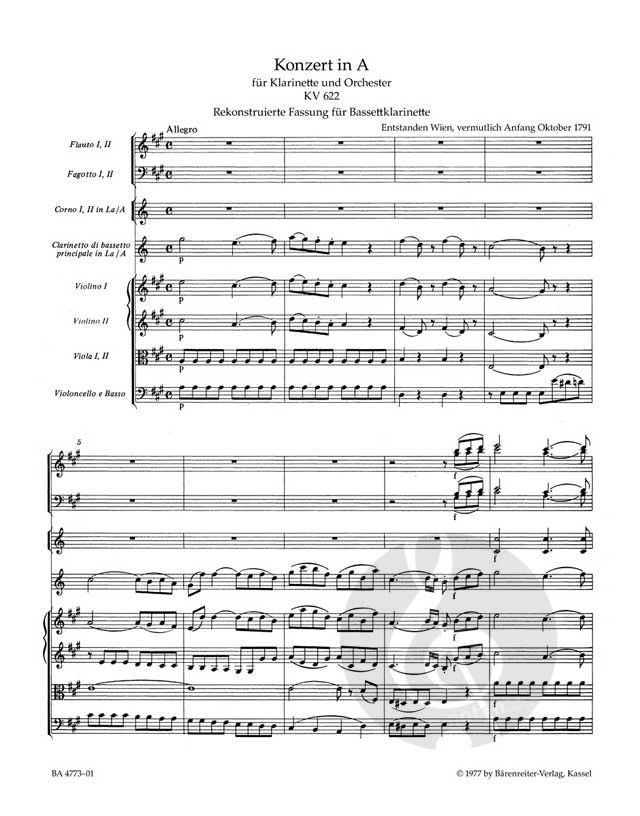
Konzert für Klarinette (Bassettklarinette) und Orchester. Fassung für Bassettklarinette. Urtext der Neuen Mozart-Ausgabe. KlarSolo, Flöte (2), Fagott (2), Horn (2), Streicher - Partitur; Urtextausgabe
Konzert für Klarinette (Bassettklarinette) und Orchester. Fassung für Bassettklarinette. Urtext der Neuen Mozart-Ausgabe. KlarSolo, Flöte (2), Fagott (2), Horn (2), Streicher - Partitur; Urtextausgabe
- clarinetto e orchestra
- partitura (urtext)
- Bärenreiter Verlag
-
sarà spedito in 2-4 giorni lavorativi
- Disponibile anche per il download!
sarà spedito in 2-4 giorni lavorativi
Konzert für Klarinette (Bassettklarinette) und Orchester. Fassung für Bassettklarinette. Urtext der Neuen Mozart-Ausgabe. KlarSolo, Flöte (2), Fagott (2), Horn (2), Streicher - Partitur; Urtextausgabe
Konzert für Klarinette (Bassettklarinette) und Orchester. Fassung für Bassettklarinette. Urtext der Neuen Mozart-Ausgabe. KlarSolo, Flöte (2), Fagott (2), Horn (2), Streicher - Partitur; Urtextausgabe
- clarinetto e orchestra
- partitura (Urtext) per scaricare
- Bärenreiter Verlag
-
immediatamente disponibile
Scarica subito dopo l'ordinazione - Download istantaneo
immediatamente disponibile
| Scarica subito dopo l'ordinazione
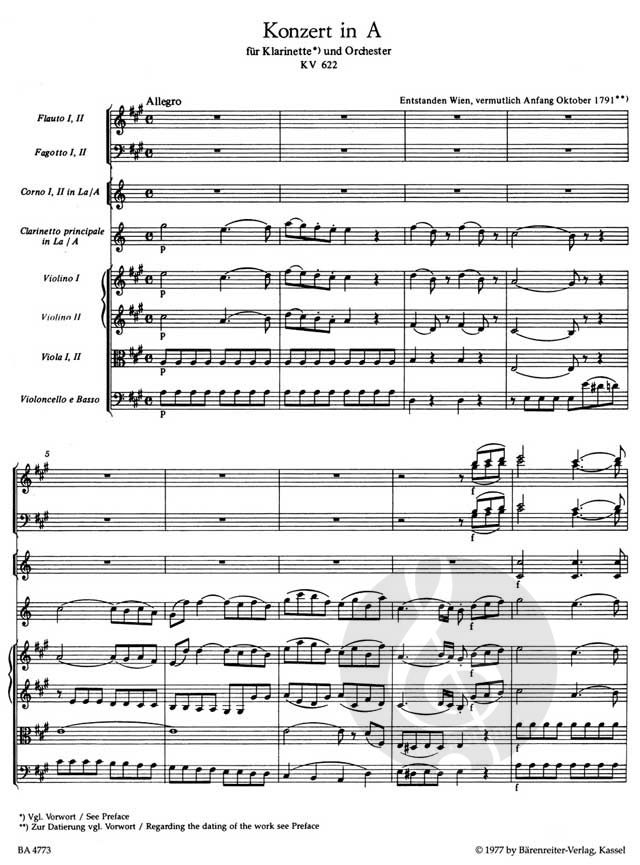
Konzert für Klarinette (Bassettklarinette) und Orchester. Fassung für Klarinette. Urtext der Neuen Mozart-Ausgabe. Klarinette Solo, Flöte (2), Fagott (2), Horn (2), Streicher - Partitur; Urtextausgabe
Konzert für Klarinette (Bassettklarinette) und Orchester. Fassung für Klarinette. Urtext der Neuen Mozart-Ausgabe. Klarinette Solo, Flöte (2), Fagott (2), Horn (2), Streicher - Partitur; Urtextausgabe
- clarinetto e orchestra
- partitura (Urtext) per scaricare
- Bärenreiter Verlag
-
immediatamente disponibile
Scarica subito dopo l'ordinazione - Download istantaneo
immediatamente disponibile
| Scarica subito dopo l'ordinazione
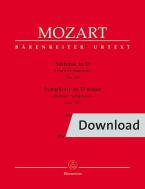
Urtext della Nuova Edizione Mozart. Flauto (2), oboe (2), clarinetto in si bemolle (2), fagotto (2), corno (2), tromba (2), timpani, archi - Partitura; edizione Urtext
Urtext della Nuova Edizione Mozart. Flauto (2), oboe (2), clarinetto in si bemolle (2), fagotto (2), corno (2), tromba (2), timpani, archi - Partitura; edizione Urtext
- orchestra
- partitura (urtext) per scaricare
- Bärenreiter Verlag
-
immediatamente disponibile
Scarica subito dopo l'ordinazione - Download istantaneo
immediatamente disponibile
| Scarica subito dopo l'ordinazione
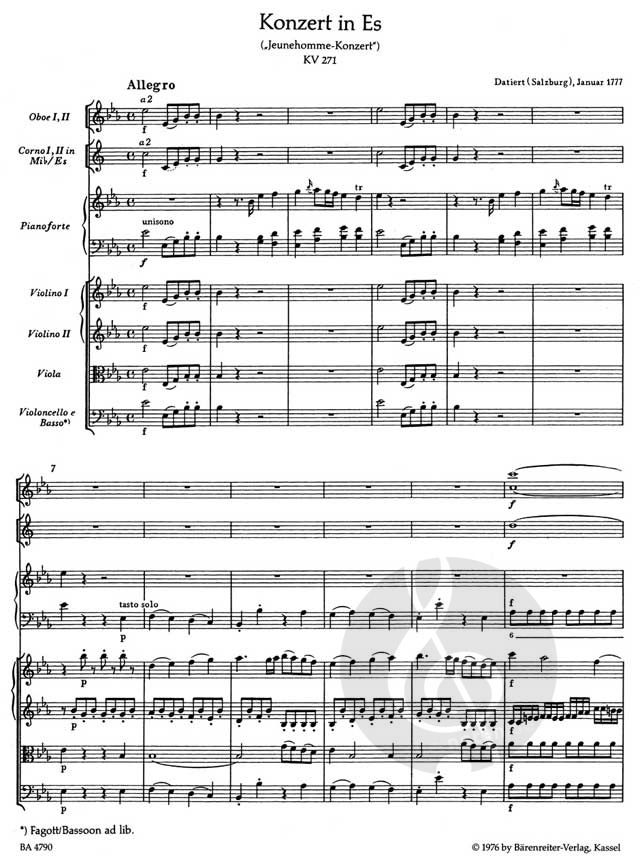
Wolfgang Amadeus Mozart's Piano Concerto No. 9 in E-flat major, K. 271, famously known as the "Jeunehomme" Concerto, stands as a monumental milestone in classical concerto repertoire. Bursting with dr...
Wolfgang Amadeus Mozart's Piano Concerto No. 9 in E-flat major, K. 271, famously known as the "Jeunehomme" Concerto, stands as a monumental milestone in classical concerto repertoire. Bursting with dr...
- Pianoforte e orchestra
- partitura (Urtext) per scaricare
- Bärenreiter Verlag
-
immediatamente disponibile
Scarica subito dopo l'ordinazione - Download istantaneo
immediatamente disponibile
| Scarica subito dopo l'ordinazione

Urtext der Neuen Mozart-Ausgabe Oboe (2), Horn (2), Streicher, Basso continuo - Partitur; Urtextausgabe
Urtext der Neuen Mozart-Ausgabe Oboe (2), Horn (2), Streicher, Basso continuo - Partitur; Urtextausgabe
- orchestra
- partitura (urtext)
- Bärenreiter Verlag
-
sarà spedito in 2-4 giorni lavorativi
- Disponibile anche per il download!
sarà spedito in 2-4 giorni lavorativi
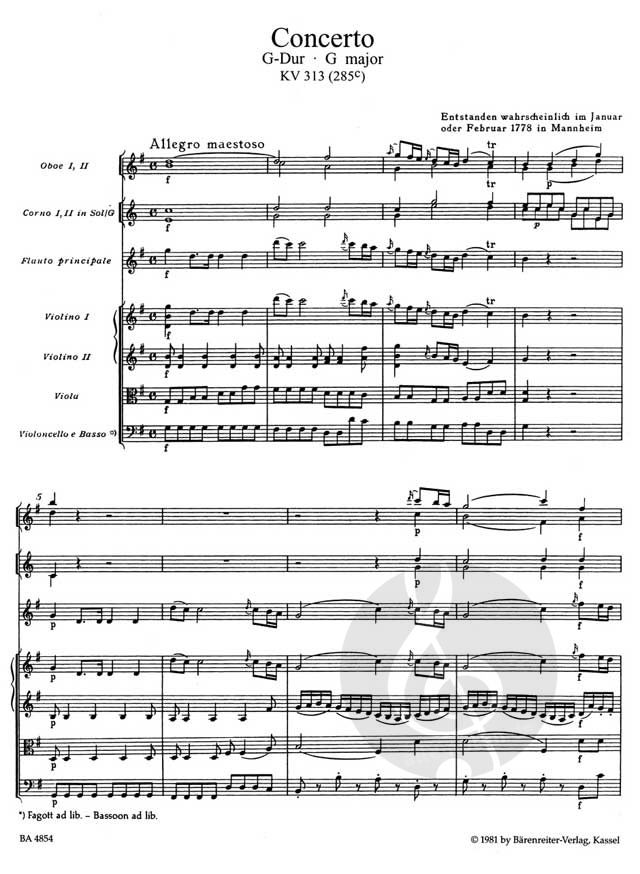
Wolfgang Amadeus Mozart's Concerto in G major, K. 313 (285c) for Flute and Orchestra is one of the most radiant masterpieces in the classical wind repertoire. With its effortless elegance, sparkling v...
Wolfgang Amadeus Mozart's Concerto in G major, K. 313 (285c) for Flute and Orchestra is one of the most radiant masterpieces in the classical wind repertoire. With its effortless elegance, sparkling v...
- flauto traverso e orchestra
- partitura (Urtext) per scaricare
- Bärenreiter Verlag
-
immediatamente disponibile
Scarica subito dopo l'ordinazione - Download istantaneo
immediatamente disponibile
| Scarica subito dopo l'ordinazione
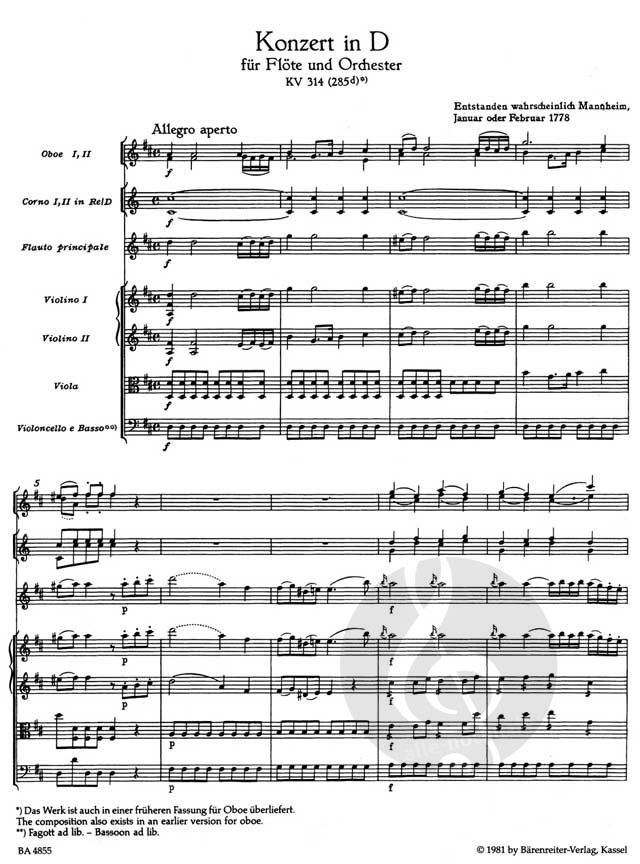
Wolfgang Amadeus Mozart's Concerto in D major K. 314 (285d) for Flute and Orchestra is undoubtedly one of the most radiant and beloved masterpieces in the classical flute repertoire. With its playful...
Wolfgang Amadeus Mozart's Concerto in D major K. 314 (285d) for Flute and Orchestra is undoubtedly one of the most radiant and beloved masterpieces in the classical flute repertoire. With its playful...
- flauto traverso e orchestra
- partitura (urtext)
- Bärenreiter Verlag
-
sarà spedito in 2-4 giorni lavorativi
- Disponibile anche per il download!
sarà spedito in 2-4 giorni lavorativi
Wolfgang Amadeus Mozart's Concerto in D major K. 314 (285d) for Flute and Orchestra is undoubtedly one of the most radiant and beloved masterpieces in the classical flute repertoire. With its playful...
Wolfgang Amadeus Mozart's Concerto in D major K. 314 (285d) for Flute and Orchestra is undoubtedly one of the most radiant and beloved masterpieces in the classical flute repertoire. With its playful...
- flauto traverso e orchestra
- partitura (Urtext) per scaricare
- Bärenreiter Verlag
-
immediatamente disponibile
Scarica subito dopo l'ordinazione - Download istantaneo
immediatamente disponibile
| Scarica subito dopo l'ordinazione
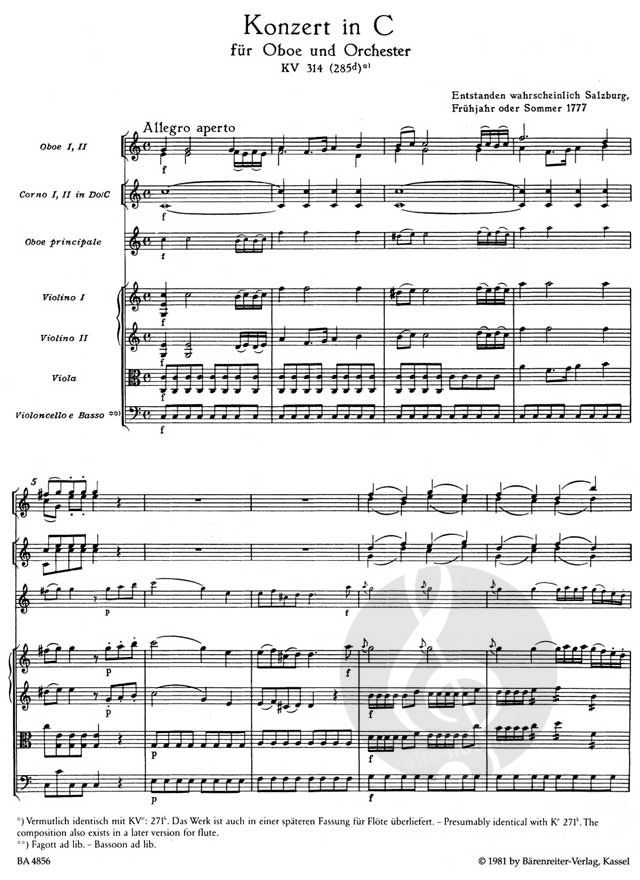
Wolfgang Amadeus Mozart’s Oboe Concerto in C major K. 314 (285d) is one of the most radiant and beloved masterworks in the woodwind repertoire. Full of classical elegance, infectious vitality, and inc...
Wolfgang Amadeus Mozart’s Oboe Concerto in C major K. 314 (285d) is one of the most radiant and beloved masterworks in the woodwind repertoire. Full of classical elegance, infectious vitality, and inc...
- oboe e orchestra
- partitura (Urtext) per scaricare
- Bärenreiter Verlag
-
immediatamente disponibile
Scarica subito dopo l'ordinazione - Download istantaneo
immediatamente disponibile
| Scarica subito dopo l'ordinazione
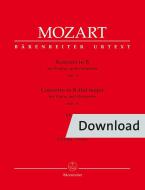
Le opere in cui Mozart utilizzò strumenti ad arco come solisti furono composte principalmente tra il 1773 e il 1779. Tuttavia, gli anni 1773 e 1775 sono particolarmente significativi all'interno di qu...
Le opere in cui Mozart utilizzò strumenti ad arco come solisti furono composte principalmente tra il 1773 e il 1779. Tuttavia, gli anni 1773 e 1775 sono particolarmente significativi all'interno di qu...
- violino e orchestra
- partitura (Urtext) per scaricare
- Bärenreiter Verlag
-
immediatamente disponibile
Scarica subito dopo l'ordinazione - Download istantaneo
immediatamente disponibile
| Scarica subito dopo l'ordinazione
Konzert für Violine und Orchester. Urtext der Neuen Mozart-Ausgabe. Violine Solo, Oboe (2), Horn (2), Streicher - Partitur; Urtextausgabe
Konzert für Violine und Orchester. Urtext der Neuen Mozart-Ausgabe. Violine Solo, Oboe (2), Horn (2), Streicher - Partitur; Urtextausgabe
- violino e orchestra
- partitura (urtext)
- Bärenreiter Verlag
-
sarà spedito in 2-4 giorni lavorativi
- Disponibile anche per il download!
sarà spedito in 2-4 giorni lavorativi
Le opere in cui Mozart utilizzò strumenti ad arco come solisti furono composte principalmente tra il 1773 e il 1779. Tuttavia, gli anni 1773 e 1775 sono particolarmente significativi all'interno di qu...
Le opere in cui Mozart utilizzò strumenti ad arco come solisti furono composte principalmente tra il 1773 e il 1779. Tuttavia, gli anni 1773 e 1775 sono particolarmente significativi all'interno di qu...
- violino e orchestra
- partitura (Urtext) per scaricare
- Bärenreiter Verlag
-
immediatamente disponibile
Scarica subito dopo l'ordinazione - Download istantaneo
immediatamente disponibile
| Scarica subito dopo l'ordinazione
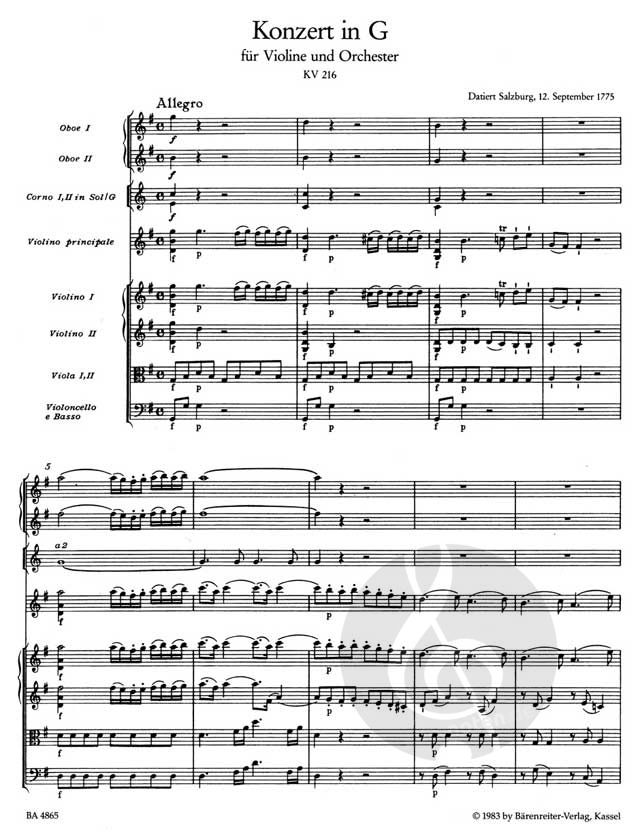
Le opere in cui Mozart utilizzò strumenti ad arco come solisti furono composte principalmente tra il 1773 e il 1779. Tuttavia, gli anni 1773 e 1775 sono particolarmente significativi all'interno di qu...
Le opere in cui Mozart utilizzò strumenti ad arco come solisti furono composte principalmente tra il 1773 e il 1779. Tuttavia, gli anni 1773 e 1775 sono particolarmente significativi all'interno di qu...
- violino e orchestra
- partitura (Urtext) per scaricare
- Bärenreiter Verlag
-
immediatamente disponibile
Scarica subito dopo l'ordinazione - Download istantaneo
immediatamente disponibile
| Scarica subito dopo l'ordinazione
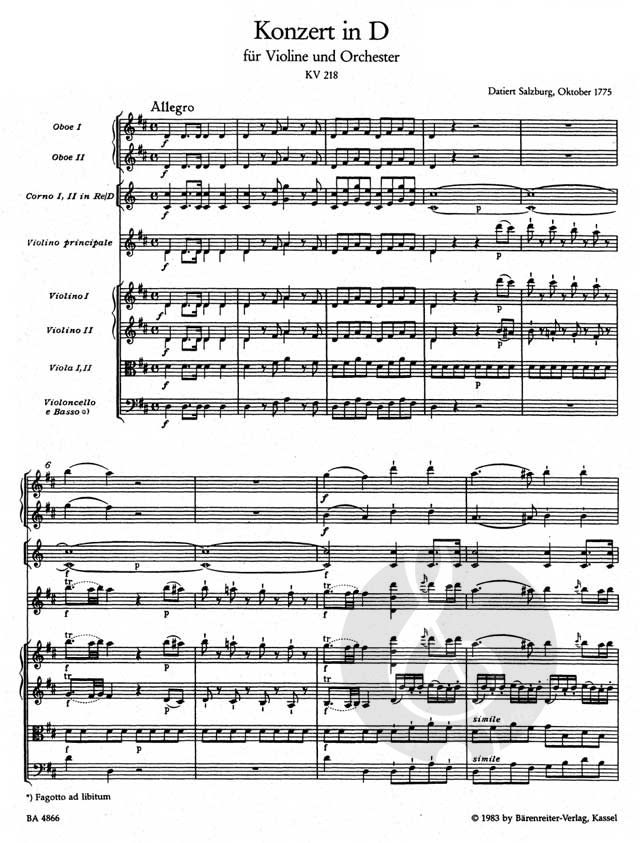
Le opere in cui Mozart utilizzò strumenti ad arco come solisti furono composte principalmente tra il 1773 e il 1779. Tuttavia, gli anni 1773 e 1775 sono particolarmente significativi all'interno di qu...
Le opere in cui Mozart utilizzò strumenti ad arco come solisti furono composte principalmente tra il 1773 e il 1779. Tuttavia, gli anni 1773 e 1775 sono particolarmente significativi all'interno di qu...
- violino e orchestra
- partitura (Urtext) per scaricare
- Bärenreiter Verlag
-
immediatamente disponibile
Scarica subito dopo l'ordinazione - Download istantaneo
immediatamente disponibile
| Scarica subito dopo l'ordinazione
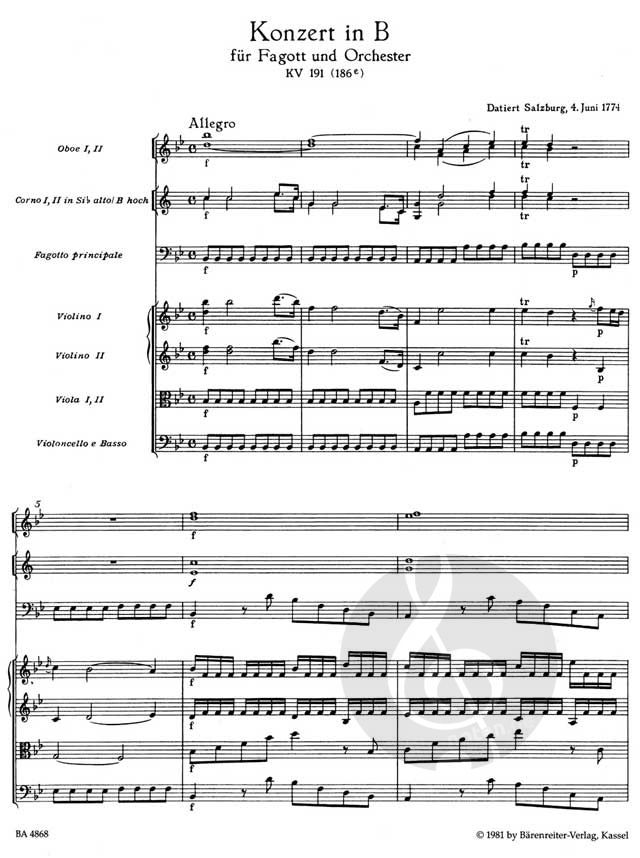
Wolfgang Amadeus Mozart's Concerto in B-flat major, K. 191 (186e) stands as the undisputed centerpiece and radiant pinnacle of the classical bassoon repertoire. Filled with effortless wit, lyrical gra...
Wolfgang Amadeus Mozart's Concerto in B-flat major, K. 191 (186e) stands as the undisputed centerpiece and radiant pinnacle of the classical bassoon repertoire. Filled with effortless wit, lyrical gra...
- fagotto e orchestra
- partitura (urtext)
- Bärenreiter Verlag
-
sarà spedito in 2-4 giorni lavorativi
- Disponibile anche per il download!
sarà spedito in 2-4 giorni lavorativi
Wolfgang Amadeus Mozart's Concerto in B-flat major, K. 191 (186e) stands as the undisputed centerpiece and radiant pinnacle of the classical bassoon repertoire. Filled with effortless wit, lyrical gra...
Wolfgang Amadeus Mozart's Concerto in B-flat major, K. 191 (186e) stands as the undisputed centerpiece and radiant pinnacle of the classical bassoon repertoire. Filled with effortless wit, lyrical gra...
- fagotto e orchestra
- partitura (Urtext) per scaricare
- Bärenreiter Verlag
-
immediatamente disponibile
Scarica subito dopo l'ordinazione - Download istantaneo
immediatamente disponibile
| Scarica subito dopo l'ordinazione
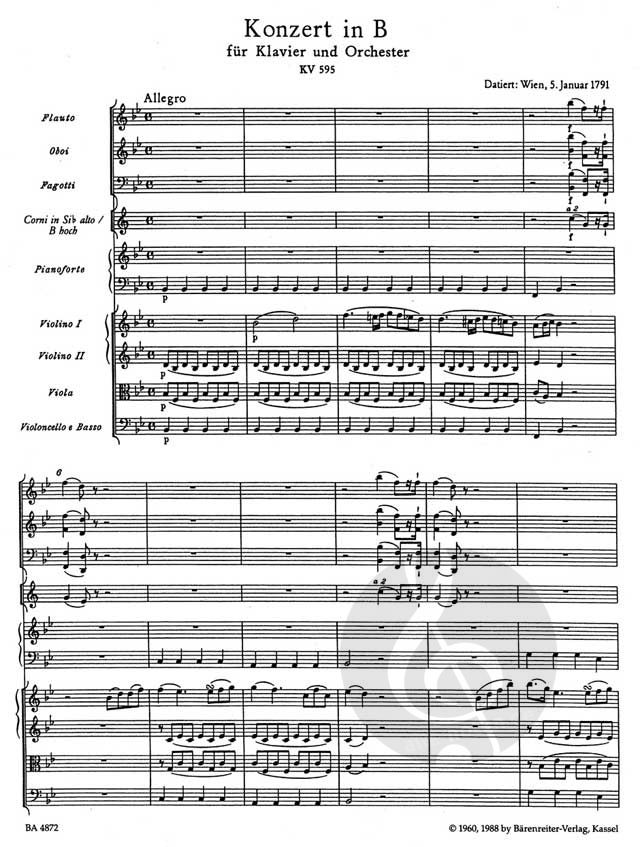
Wolfgang Amadeus Mozart's Piano Concerto No. 27 in B-flat major, K. 595, is a timeless masterpiece filled with touching intimacy, lyrical elegance, and profound poetry. As Mozart's final completed pia...
Wolfgang Amadeus Mozart's Piano Concerto No. 27 in B-flat major, K. 595, is a timeless masterpiece filled with touching intimacy, lyrical elegance, and profound poetry. As Mozart's final completed pia...
- Pianoforte e orchestra
- partitura (urtext)
- Bärenreiter Verlag
-
sarà spedito in 2-4 giorni lavorativi
- Disponibile anche per il download!
sarà spedito in 2-4 giorni lavorativi
Wolfgang Amadeus Mozart's Piano Concerto No. 27 in B-flat major, K. 595, is a timeless masterpiece filled with touching intimacy, lyrical elegance, and profound poetry. As Mozart's final completed pia...
Wolfgang Amadeus Mozart's Piano Concerto No. 27 in B-flat major, K. 595, is a timeless masterpiece filled with touching intimacy, lyrical elegance, and profound poetry. As Mozart's final completed pia...
- Pianoforte e orchestra
- partitura (Urtext) per scaricare
- Bärenreiter Verlag
-
immediatamente disponibile
Scarica subito dopo l'ordinazione - Download istantaneo
immediatamente disponibile
| Scarica subito dopo l'ordinazione
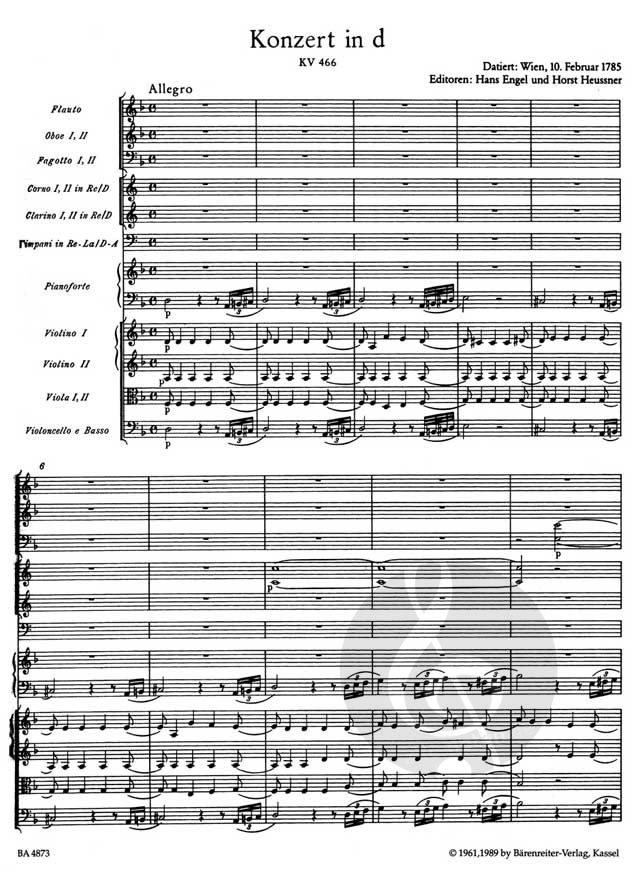
Concerto per pianoforte e orchestra. Urtext della Nuova Edizione Mozart. Pianoforte solo, flauto, oboe (2), fagotto (2), corno (2), tromba (2), timpani, archi - partitura; edizione Urtext
Concerto per pianoforte e orchestra. Urtext della Nuova Edizione Mozart. Pianoforte solo, flauto, oboe (2), fagotto (2), corno (2), tromba (2), timpani, archi - partitura; edizione Urtext
- Pianoforte e orchestra
- partitura (urtext) per scaricare
- Bärenreiter Verlag
-
immediatamente disponibile
Scarica subito dopo l'ordinazione - Download istantaneo
immediatamente disponibile
| Scarica subito dopo l'ordinazione
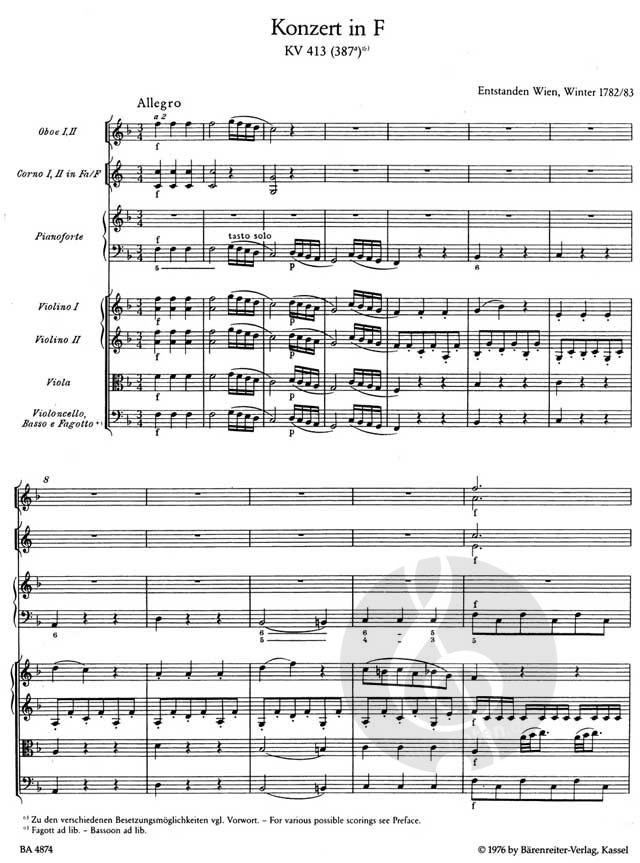
Konzert für Klavier und Orchester. Urtext der Neuen Mozart-Ausgabe - Concerto for Piano and Orchestra. KlavSolo, Flöte, Oboe (2), Horn (2), Streicher - Partitur; Urtextausgabe
Konzert für Klavier und Orchester. Urtext der Neuen Mozart-Ausgabe - Concerto for Piano and Orchestra. KlavSolo, Flöte, Oboe (2), Horn (2), Streicher - Partitur; Urtextausgabe
- Pianoforte e orchestra
- partitura (urtext)
- Bärenreiter Verlag
-
sarà spedito in 2-4 giorni lavorativi
- Disponibile anche per il download!
sarà spedito in 2-4 giorni lavorativi
Konzert für Klavier und Orchester. Urtext der Neuen Mozart-Ausgabe - Concerto for Piano and Orchestra. KlavSolo, Flöte, Oboe (2), Horn (2), Streicher - Partitur; Urtextausgabe
Konzert für Klavier und Orchester. Urtext der Neuen Mozart-Ausgabe - Concerto for Piano and Orchestra. KlavSolo, Flöte, Oboe (2), Horn (2), Streicher - Partitur; Urtextausgabe
- Pianoforte e orchestra
- partitura (Urtext) per scaricare
- Bärenreiter Verlag
-
immediatamente disponibile
Scarica subito dopo l'ordinazione - Download istantaneo
immediatamente disponibile
| Scarica subito dopo l'ordinazione
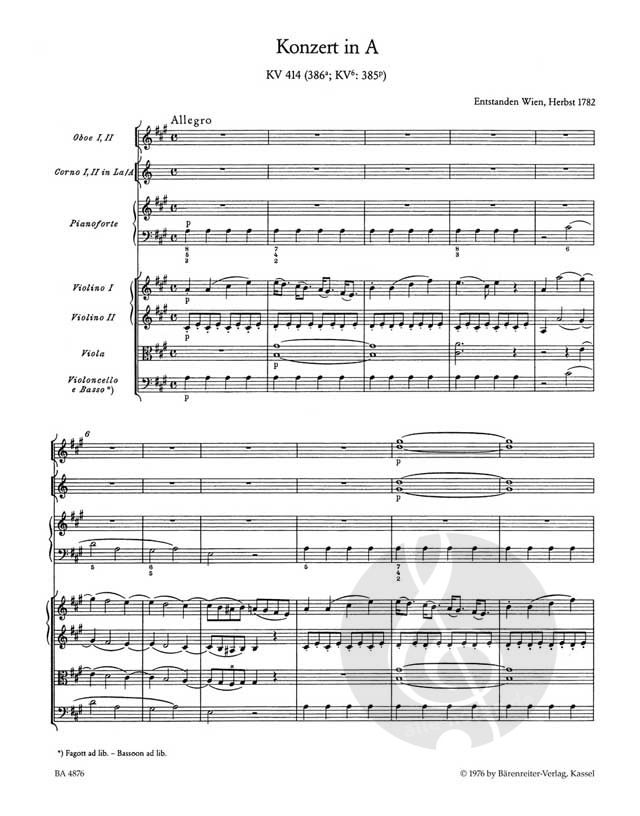
Wolfgang Amadeus Mozart's Piano Concerto No. 12 in A major, K. 414 enchants with its melodic grace, tonal elegance, and delicate intimacy. As the first of Mozart's early Viennese piano concertos, it d...
Wolfgang Amadeus Mozart's Piano Concerto No. 12 in A major, K. 414 enchants with its melodic grace, tonal elegance, and delicate intimacy. As the first of Mozart's early Viennese piano concertos, it d...
- Pianoforte e orchestra
- partitura (Urtext) per scaricare
- Bärenreiter Verlag
-
immediatamente disponibile
Scarica subito dopo l'ordinazione - Download istantaneo
immediatamente disponibile
| Scarica subito dopo l'ordinazione