
Jean Sibelius
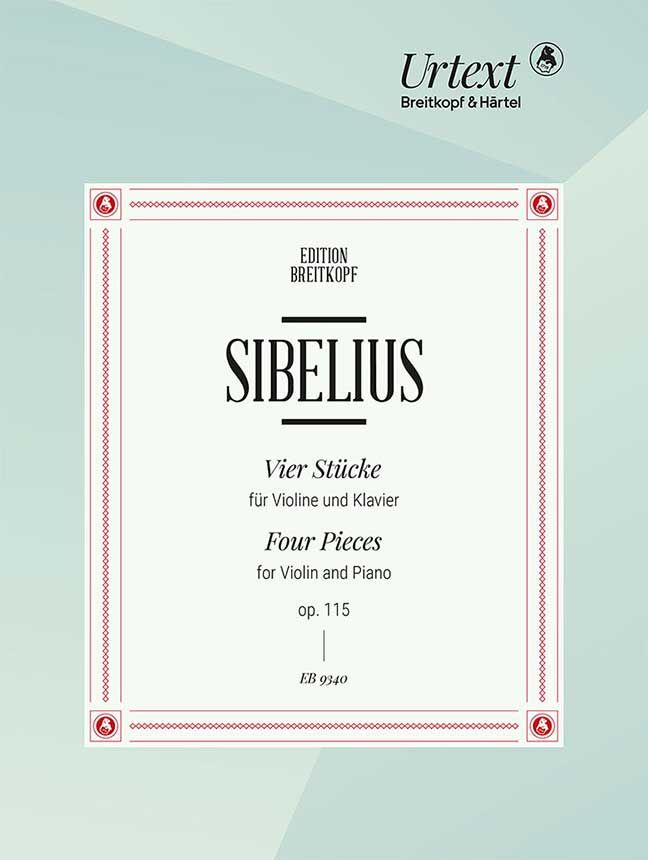
4 Pieces op. 115
for Violin and Piano
PDF
vista
Jean Sibelius
4 Pieces op. 115
for Violin and Piano
- Formazione violino e pianoforte
- Compositore Jean Sibelius
- Editore Anna Pulkkis
- Edizione partitura per pianoforte e parte/i (urtext)
- Casa Editrice Breitkopf & Härtel
- Numero d'ordine EB9340
 disponibile
sarà spedito in 1-2 giorni lavorativi
IVA inclusa,
Escluse le spese di spedizione
Non disponibile in tutti i Paesi. Saperne di più
Descrizione:
Characteristic Numbers
Sibelius completed his final opus-number compositions, opp. 115 and 116, in 1929. They were originally composed at the suggestion of the publishers Carl Fischer, Inc., but were then refused acceptance due to their high performance demands. There, as 'characteristic numbers […] for general purposes,' something else had evidently been envisioned - above all, something easier to sell. After some delays, the pieces were published instead by Breitkopf & Härtel in 1930. If earlier on Sibelius had composed smaller chamber music works especially to earn money from their sales, this was no longer necessary by the end of the 1920s. He then seemed to use this artistic freedom to experiment once again with 'his' instruments (devoting himself in particular to the violin besides the piano). Op. 115 consists of four programmatically titled pieces in which we find not only melodic lines and introverted sounds, but also virtuosic runs as well as lively rhythms, presupposing perfect ensemble playing by pianist and violinist.
Sibelius completed his final opus-number compositions, opp. 115 and 116, in 1929. They were originally composed at the suggestion of the publishers Carl Fischer, Inc., but were then refused acceptance due to their high performance demands. There, as 'characteristic numbers […] for general purposes,' something else had evidently been envisioned - above all, something easier to sell. After some delays, the pieces were published instead by Breitkopf & Härtel in 1930. If earlier on Sibelius had composed smaller chamber music works especially to earn money from their sales, this was no longer necessary by the end of the 1920s. He then seemed to use this artistic freedom to experiment once again with 'his' instruments (devoting himself in particular to the violin besides the piano). Op. 115 consists of four programmatically titled pieces in which we find not only melodic lines and introverted sounds, but also virtuosic runs as well as lively rhythms, presupposing perfect ensemble playing by pianist and violinist.
I clienti hanno valutato questo prodotto:
Informazioni del Produttore:
Breitkopf & Härtel KG
Walkmühlstraße 52
65195
Wiesbaden
Deutschland
Altri clienti hanno acquistato anche:
- violino e pianoforte
- spartiti
-
disponibile
sarà spedito in 1-2 giorni lavorativi - Disponibile anche per il download!
Jean Sibelius
- violino e pianoforte
- spartiti
-
sarà spedito in 3-6 giorni lavorativi
- pianoforte
- partitura per pianoforte (urtext)
-
disponibile
sarà spedito in 1-2 giorni lavorativi
Jean Sibelius
- violino e pianoforte
- spartiti
-
disponibile
sarà spedito in 1-2 giorni lavorativi
- solisti, coro misto (SATB) e organo
- riduzione per organo
- Ingo Bredenbach
-
disponibile
sarà spedito in 1-2 giorni lavorativi - Disponibile anche per il download!
Camille Saint-Saëns
- violino e pianoforte
- spartiti
-
disponibile
sarà spedito in 1-2 giorni lavorativi